
The False Alarm System
Learn what panic actually is, why it feels catastrophic, and how to see surges as intense but harmless false alarms rather than emergencies.
A quiet, research-informed email Trek that helps you understand your nervous system, soften the panic “false alarm” loop, and build a kinder relationship with anxiety using small, repeatable tools you can actually use in daily life.

This Trek walks you from “something is wrong with me” to “my nervous system is learning.” Across a series of calm Checkpoints, you’ll understand panic as a false alarm, practice body-based skills, rewire fear of sensations through gentle exposure, and build a more compassionate identity around anxiety and calm.
Learn what panic actually is, why it feels catastrophic, and how to see surges as intense but harmless false alarms rather than emergencies.
Tell the difference between slow-burn anxiety and sudden panic, and understand anxiety sensitivity — the fear of sensations themselves that quietly fuels both.
Use 4–6 breathing, grounding, and gentle muscle release to lower the volume on your alarm system without forcing your body to “calm down.”
Practice Claire Weekes–inspired “face, accept, float, let time pass” and simple mindfulness so sensations can rise and fall without turning into spirals.
Swap catastrophic self-talk for grounded, believable phrases that reduce fear-of-fear instead of accidentally feeding it.
Design gentle interoceptive and situational exposure steps so you can safely practice feared sensations and reclaim avoided places without pressure or heroics.
Build quiet habits around sleep, food, hydration, movement, and stress load that make false alarms less likely and less intense.
Shift from “I am an anxious person” to “I’m a person learning calm,” and create a simple Calm Map you can return to whenever life feels loud.
This isn’t a motivational burst you’ll forget tomorrow. It’s a quiet, finishable route: short, sequenced emails that move from understanding, to skills, to exposure, to a new calm identity.
Each Checkpoint is small on purpose. You can walk this Trek alongside work, caregiving, and real life — and you can pause and resume whenever you need.
You sign up once. The welcome Checkpoint explains panic as a false alarm, separates you from your symptoms, and shows you the calm, structured path ahead.
10–15 minutes to get orientedOver the next weeks, you’ll receive short Checkpoints that move from body tools to thinking tools, exposure, lifestyle, and identity — one clear idea at a time.
Designed for a calm reading paceEvery Checkpoint pairs the concept with a small practice: a breathing minute, a grounding rep, a micro exposure, a journaling line, or a nervous system habit to experiment with.
Fits alongside real life, not instead of itAt the Summit, you get a clear recap and a one-page Calm Map — your personal list of tools, beliefs, and habits you can return to whenever the next wave of anxiety shows up.
Keep the map for future wavesEnter your email to begin. Your welcome note and first Checkpoint arrive shortly, followed by a steady sequence of calm lessons you can walk alongside everyday life — at your pace, in your own time.
We respect your privacy. Read our policy.

Download the checklists, templates, and quick-reference guides mentioned in your emails. Keep them — free, clear, and printable. No funnels.
A simple visual guide to steady your breath and activate your body’s natural calming system in anxious moments.
A gentle, step-by-step reference for safely practicing panic-like sensations to build confidence and reduce fear.
A clear worksheet for breaking avoided situations into manageable steps so progress feels structured and achievable.
The full Trek in one place — a calm, evidence-informed guide to understanding anxiety, panic, and the nervous system so you can respond rather than react. Grounded explanations, steady tools, and simple practices that help you build a more stable baseline over time. Keep it offline. Revisit anytime.
This Trek is designed to help you move from constant edge-of-panic to a steadier, more grounded everyday life. If you’d like a calm, non-judgmental guide as you apply what you learn, you can bring a Sherpa alongside you.

A quick set of answers so you know what this Trek covers, who it’s for, and how it can support you with anxiety and panic.
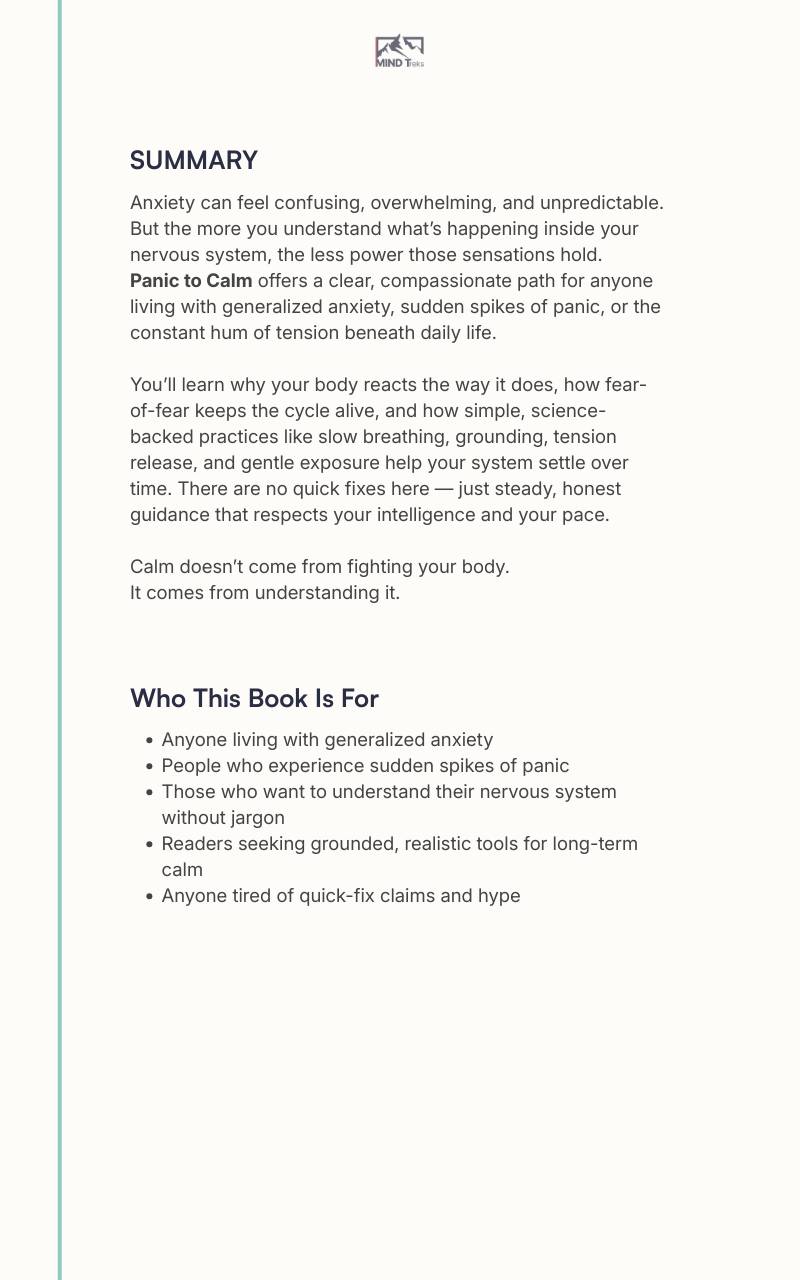
Panic to Calm is for thoughtful adults who live with anxiety, panic attacks, or fear-of-fear and want a gentle, evidence-informed way to understand what’s happening in their body and build practical skills. You don’t need prior knowledge of therapy models — just curiosity and a willingness to experiment.
You’ll understand how panic and anxiety work, know why your body feels the way it does, and have a toolkit of research-backed practices: breathing and grounding, muscle relaxation, mindfulness, gentle self-talk, journaling, and exposure steps. You’ll also have a simple plan for facing feared sensations and situations more confidently over time.
The Trek is delivered in around twenty short, structured emails — from First Step to Summit Day. Each lesson takes just a few minutes to read, with optional reflection or practice you can go deeper on. You’re free to move at your own pace, re-read Checkpoints, and pause whenever you need.
No. The Trek is designed for a general audience of people who notice anxiety or panic affecting their life — whether or not they have a formal diagnosis or are already in therapy. If you are working with a professional, you can treat this Trek as structured self-help homework to complement that support.
Yes, it’s completely free. There are no upsells, hidden funnels, or pressure tactics. If we ever mention books, apps, or tools, we keep them optional and, where relevant, clearly disclose affiliate links. You can unsubscribe from the Trek at any time with a single click.
No. Panic to Calm is educational self-help, not medical care. It draws from evidence-based ideas like CBT, exposure, and mindfulness, but it can’t diagnose, treat, or monitor your specific situation. If your symptoms are severe, complex, or you’re in crisis, please seek support from a qualified mental health or medical professional and use this Trek as a complement, not a substitute.
Still unsure if this Trek fits your situation? You can always reply to any Trek email with a quick question — we read every response.